
Manufactured Homes in 2026: The Federal Rule Changes Every Wisconsin Buyer Should Know
In 2026, federal lawmakers and the country's two largest mortgage agencies are rewriting the rules for manufactured homes. Three changes matter most for Wisconsin buyers: Congress passed legislation to remove the 1976 permanent steel chassis requirement, projected to lower the price of every new manufactured home by $5,000 to $10,000; Fannie Mae expanded eligibility to include multistory manufactured homes and replaced its $50,000 renovation cap with a 50 percent of as-completed value standard, effective March 31, 2026; and Freddie Mac extended the maximum cashout refinance term for manufactured housing loans from 20 to 30 years. Together, these changes shrink the historic price and financing gap between manufactured homes and site-built homes, and open new pathways for first-time buyers in Kenosha, Racine, and Milwaukee counties to access affordable, factory-built housing.
If you have been waiting for the right moment to consider a manufactured or modular home in Wisconsin, 2026 is shaping up to be a rare year of policy alignment. This guide breaks down what each change actually says, what is in effect today versus what is still pending, and how it changes the math for Wisconsin buyers.
What Is the ROAD to Housing Act, and Why Does the Chassis Rule Matter?
The 21st Century ROAD to Housing Act is a bipartisan housing bill released March 2, 2026, that combines earlier House and Senate proposals into the most significant housing affordability package in a generation. The Senate passed it 89 to 10. Among its many provisions, Section 301 of the bill modifies the federal definition of a manufactured home to remove the requirement that the home be built on a permanent steel chassis, a rule that has been on the books since 1976.
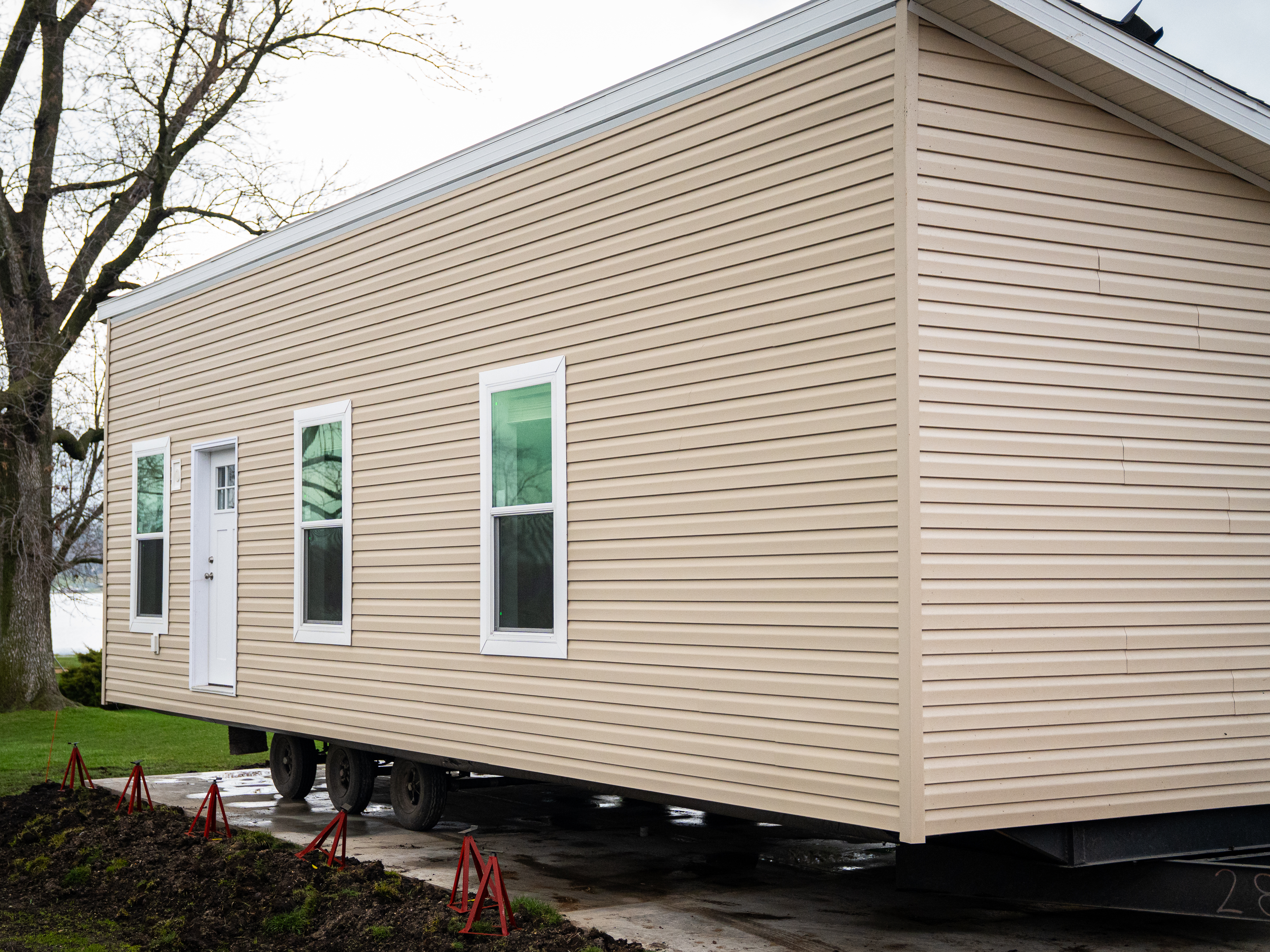
The chassis is the steel frame that today every HUD Code home is built on. It serves no function once the home is set on a foundation, but it adds cost, weight, and design constraints. Removing the requirement is expected to reduce the cost of a new manufactured home by an estimated $5,000 to $10,000 and unlock more flexible floor plans, including better basement integration and second-story configurations.
The most consequential downstream effect is on financing. Under the bill, each state must certify within one year of enactment (two years for states with biennial legislatures, which includes Wisconsin) that its laws treat chassis and non-chassis manufactured homes in parity for financing, title, insurance, taxes, and installation. In practical terms, more manufactured homes will be eligible to be titled as real property and qualify for FHA, conventional, and VA mortgages instead of being routed into chattel loans.
Status check as of May 2026: The bill has passed both chambers but has not yet been signed into law. Whether or not the chassis change takes effect this year, the policy momentum is unmistakable. Buyers shopping in 2026 should plan around what is already in effect, and watch the bill's progress closely.
Real Property vs. Chattel: Why the Title Question Is the Whole Ballgame
The single biggest financial difference in manufactured home ownership comes down to one question: Is the home titled as real property or as personal property?
A manufactured home titled as real property is treated like any site-built house. The home is permanently affixed to a foundation on land the owner controls, and the home and land are financed together with a traditional mortgage. The home appraises alongside neighboring houses, builds equity over time, and qualifies for FHA, conventional, USDA, and VA loan products.
A manufactured home titled as personal property, also called chattel, is treated more like a vehicle than a house. The loan is governed by the Uniform Commercial Code rather than mortgage law, and it carries shorter terms, higher interest rates, and fewer borrower protections. According to data published by the Consumer Financial Protection Bureau, the average rate on a manufactured home financed as personal property was roughly 8 percent in recent years, compared to about 5.5 percent for the same home financed as real estate.
Down payments are also dramatically different. Real-property mortgages can go as low as 0 percent down (VA and USDA), 3.5 percent (FHA), or 5 percent (conventional). Chattel loans typically require 5 to 20 percent down. Real-property homes appreciate alongside surrounding real estate; chattel-financed homes often depreciate like a vehicle. Real-property loans carry strong borrower protections under RESPA, TILA, and federal foreclosure rules; chattel loans fall under the Uniform Commercial Code with weaker safeguards. The land question is the dividing line: real-property financing requires the buyer to own or hold a long-term lease on the land, while chattel financing allows the home to sit on rented land.
Real-property mortgage rates typically run 5.5 to 7 percent, while chattel rates land closer to 8 to 10 percent. Real-property loans run 15 to 30 years; chattel loans have historically capped at 20 to 23 years, though Freddie Mac just extended cashout refinances to 30 years (more on that below).
Wisconsin has a specific path for converting a manufactured home title to real property. The home must be permanently affixed to a foundation on land the owner controls, and the title must be surrendered to the Wisconsin Department of Safety and Professional Services so the home can be recorded with the county Registrar of Deeds. This is the step that unlocks mortgage financing in Wisconsin today, and it is exactly the kind of friction the ROAD Act is designed to reduce nationwide.
Fannie Mae's March 2026 Expansion: What Changed
Effective March 31, 2026, Fannie Mae's Selling Guide expanded eligibility for manufactured homes and ADUs in three ways that directly benefit buyers and builders in Wisconsin.
First, multistory manufactured homes are now eligible for Fannie Mae financing. Until this change, only single-story manufactured homes qualified, which limited buyer options on smaller lots and in markets where vertical building is the most efficient use of land. The change opens the door for new floor plans that compete more directly with townhouses and small site-built homes.
Second, manufactured homes are now eligible on two-, three-, and four-unit properties. This is a meaningful shift for buyers considering small multifamily configurations, including a primary residence with a separate rental unit on the same parcel.
Third, Fannie Mae replaced the previous $50,000 renovation cap for manufactured homes with a far more flexible limit of 50 percent of the home's as-completed appraised value. For example, a manufactured home that will appraise at $250,000 once the project is finished can now finance up to $125,000 in renovations, more than double the prior ceiling. Fannie Mae's HomeStyle Refresh product, also live as of March 31, 2026, lets borrowers finance up to 15 percent of the as-completed value for cosmetic and energy improvements through a purchase or cash-out refinance.
The Federal Housing Finance Agency's 2026 conforming loan limit is $832,750 for a one-unit property, including manufactured and modular homes. That is a $26,250 increase over the 2025 cap of $806,500 and gives Wisconsin buyers more headroom on loan amounts before they hit jumbo territory.
Freddie Mac Extends Cashout Refinance Terms to 30 Years
In a recent bulletin, Freddie Mac extended the maximum term for cashout refinances of manufactured housing loans from 20 years to 30 years, with the stated goal of supporting sustainable homeownership. For an existing Wisconsin manufactured home owner, that change can meaningfully lower a monthly payment when refinancing to tap equity for renovations, debt consolidation, or a down payment on additional property.
Quick math: a $200,000 cashout refinance at a 7 percent rate on a 20-year term carries a principal and interest payment of about $1,550 per month. The same balance amortized over 30 years drops to roughly $1,330. That is $220 per month back in the homeowner's budget, or about $2,640 per year.
What This Means for Wisconsin Buyers in Kenosha, Racine, and Milwaukee
The Southeast Wisconsin housing market in early 2026 is defined by a stubborn affordability gap. The Kenosha metro median listing price is around $384,000. Racine County saw home sales rise 8.2 percent in the first quarter, while Kenosha County sales were essentially flat. Inventory is improving but slowly, and most forecasters expect 30-year fixed mortgage rates to stay in the low to mid 6 percent range through much of the year.

Against that backdrop, the federal rule changes are not abstract. They are the difference between a buyer who could not afford to enter the market last year and one who can this year. A modular home in Wisconsin starts at roughly $42 per square foot, with a 1,800 square foot model coming in around $75,000 before land and site improvements. Compared to the average starting cost of a stick-built home in Wisconsin (approximately $304,000), the savings stack with the new federal rules and produce a real, addressable path to ownership.
Adrenaline Homes' lineup is purpose-built for this moment. The Tesla model at 1,012 square feet hits the first-time buyer price band. The In-Law at 540 square feet is well suited to ADU and rental income use cases now that Fannie Mae allows up to three ADUs on a single-unit property. The Royale at 1,805 square feet covers the growing-family budget. All three are eligible for the same financing pathways the new rules expand.
Action Steps for Wisconsin Buyers in 2026
Confirm whether your target home will be titled as real property. Ask any dealer you work with to walk you through Wisconsin's title surrender process and confirm the home will be permanently affixed to a foundation on land you own.
Compare a chattel quote against a real-property mortgage quote on the same home. With the federal rule changes, more homes qualify for the lower-rate option than ever before. The rate spread can save a buyer tens of thousands of dollars over the life of the loan.
Ask your loan officer about Fannie Mae's HomeStyle Refresh and the new renovation cap if you are considering a home that needs upgrades. The expanded ceilings can fold renovation costs into the original mortgage at a much lower rate than a separate personal loan.
If you already own a manufactured home, run the numbers on a 30-year cashout refinance. A 10-year extension on amortization is a meaningful monthly cash-flow lever.
Watch the ROAD to Housing Act. Even before it is signed, dealers and lenders will start designing products around it. The first buyers to engage will get the broadest selection of new floor plans and the longest runway on financing decisions.
Frequently Asked Questions
Has the ROAD to Housing Act been signed into law?
As of May 2026, the bill has passed both the Senate (89 to 10) and the House but has not yet been signed by the President. The Senate version is the most current text, released March 2, 2026. Once signed, states will have one or two years to certify parity between chassis and non-chassis manufactured homes.
Can I get a regular mortgage on a manufactured home in Wisconsin today?
Yes, in many cases. If the home is permanently affixed to a foundation on land you own and the title has been surrendered to be recorded as real property with your county Registrar of Deeds, the home is eligible for FHA, conventional, USDA, and VA loans. This pathway already exists. The 2026 rule changes are designed to expand the number of homes that qualify and to reduce the cost of getting there.
How much can I save by financing as real property instead of chattel?
On a $200,000 loan, the difference between an 8 percent chattel rate and a 6 percent mortgage rate is roughly $280 per month, or about $100,000 over a 30-year term. Even small rate differences compound dramatically over the life of the loan.
What is the difference between a manufactured home and a modular home in 2026?
A manufactured home is built to the federal HUD Code in a factory and historically has been required to be built on a permanent steel chassis. A modular home is built to state and local building codes (the Wisconsin Uniform Dwelling Code, in this case) in a factory and is set on a permanent foundation. Both are factory-built. The chassis rule change in the ROAD Act narrows the practical distinction between the two and could reshape how new factory-built homes are categorized in the years ahead.
Will the chassis rule change affect existing manufactured homes?
No. The change applies to the federal definition going forward. Homes already built and titled remain governed by the rules in place at the time of construction. The downstream financing improvements, however, could benefit existing owners as states update their parity laws and as lenders broaden the products available for existing manufactured housing stock.
Are these changes good news or bad news for buyers?
All three changes lower the cost of buying or owning a manufactured home in Wisconsin. The chassis rule removes thousands of dollars in unnecessary build cost. Fannie Mae's expansion broadens what qualifies and raises renovation ceilings. Freddie Mac's longer cashout term improves monthly cash flow on refinances. The common thread is increased access and lower lifetime cost.
Ready to See What 2026 Looks Like in Person?
Adrenaline Homes is a Kenosha, Wisconsin-based seller of manufactured, modular, and prefab homes with a smart showroom powered by VR and virtual tours, a curated lineup of modern home models, and access to 300+ floor plans. As federal rules shift in 2026, the team is committed to helping Wisconsin buyers understand exactly how the changes affect their financing options, their floor plan choices, and their timeline to move-in.
Browse all models to compare floor plans, specs, and pricing.
Schedule a no-obligation consultation for a tailored cost and financing estimate based on your land and budget.
Visit our Kenosha showroom to walk through models in person, or take a virtual tour from anywhere.